

Bloomberg weighs heavily in 2026, Hong Kong is expected to climb to the top of the world's largest wealth center!

Recently, Bloomberg Industry Research released the "Hong Kong Wealth Management 2026 Outlook" report, which has attracted widespread attention in the financial and wealth circles. The report provides clear guidance for mainland investors to plan their overseas asset layout through nearly 60 pages of in-depth analysis and detailed data.
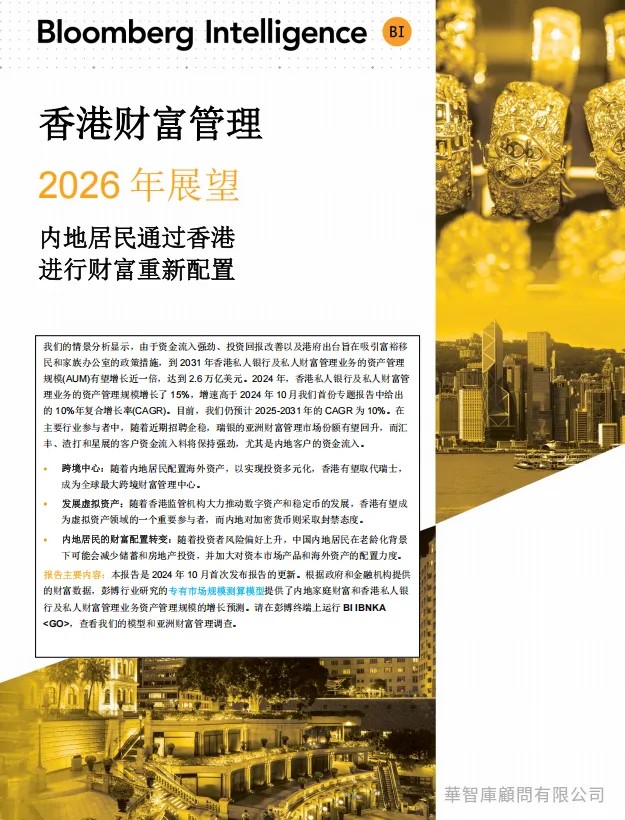
The study emphasizes that Hong Kong is rapidly becoming a world-class cross-border asset management hub, creating new opportunities for asset appreciation for general customers, middle-income families, and affluent individuals.
Hong Kong, the world's number one
1、 Expected to replace Switzerland as a cross-border wealth center
The report makes an important prediction that Switzerland's position as a traditional wealth management center is being challenged. The relevant data clearly shows this trend of change:
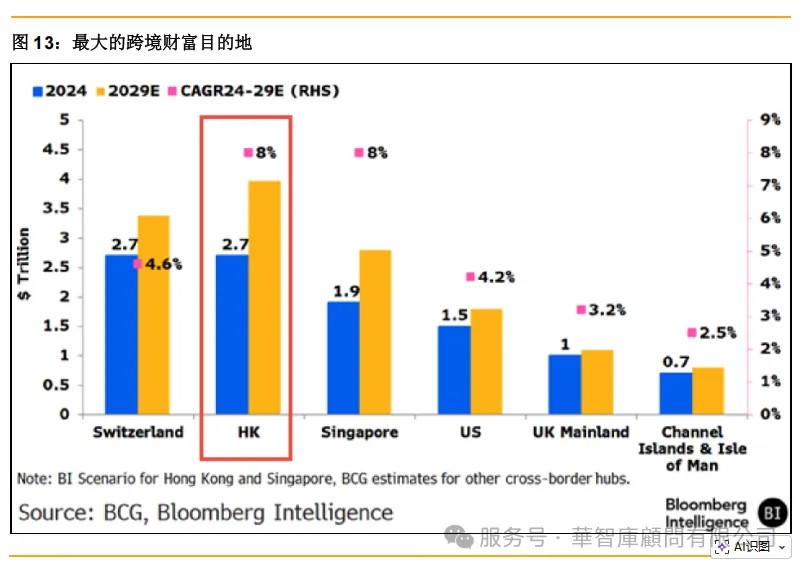
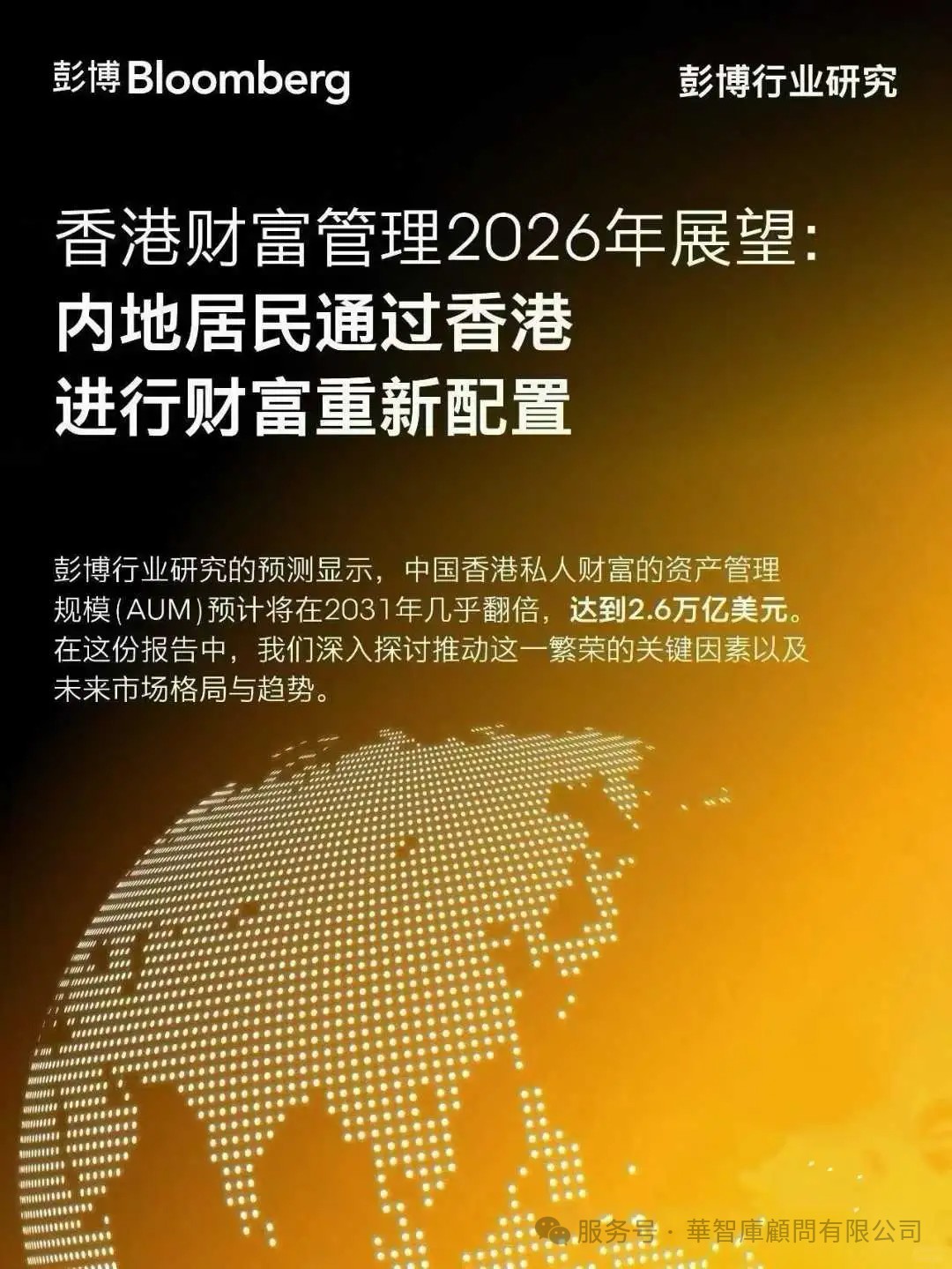
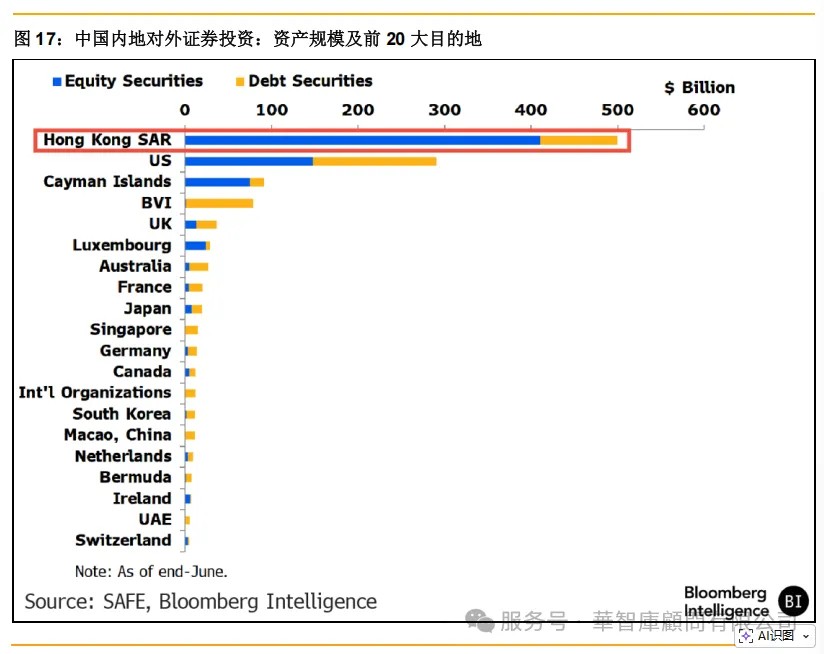
By 2024, the total amount of private wealth management assets in Hong Kong has reached $1.3 trillion, with an annual growth rate of 15%. Under the benchmark forecast, the scale is expected to increase to $2.6 trillion by 2031, with an expected compound annual growth rate of 10%. Among them, the proportion of non local residents' assets may exceed 80% (about 2.1 trillion US dollars), making Hong Kong potentially surpass Switzerland and become the world's largest overseas asset management base.
The growth mainly comes from the mainland market. It can be said that the increasing demand for overseas allocation by mainland residents and Hong Kong's efforts to build an international wealth platform are mutually reinforcing - the outflow of funds prioritizes Hong Kong, and Hong Kong's prosperity also relies on the sustained support of the mainland market.
2、 By 2031, the management scale of high net worth assets in Hong Kong is expected to double
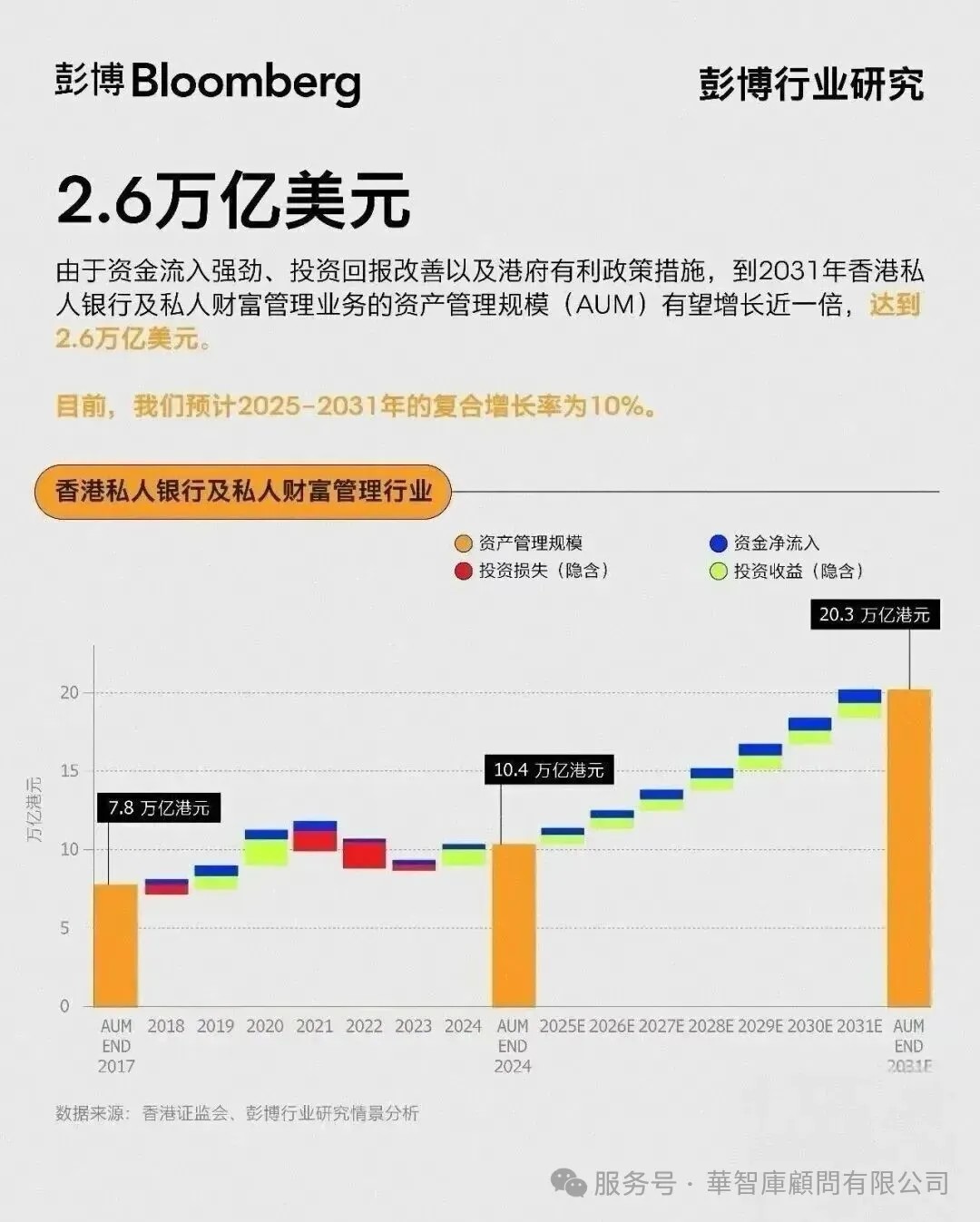
The private wealth management sector in Hong Kong is currently in a thriving stage of development. In 2024, the asset size of the industry exceeded the HKD 10.4 trillion mark for the first time, with a year-on-year growth of 15%, significantly higher than the market's general expectation.
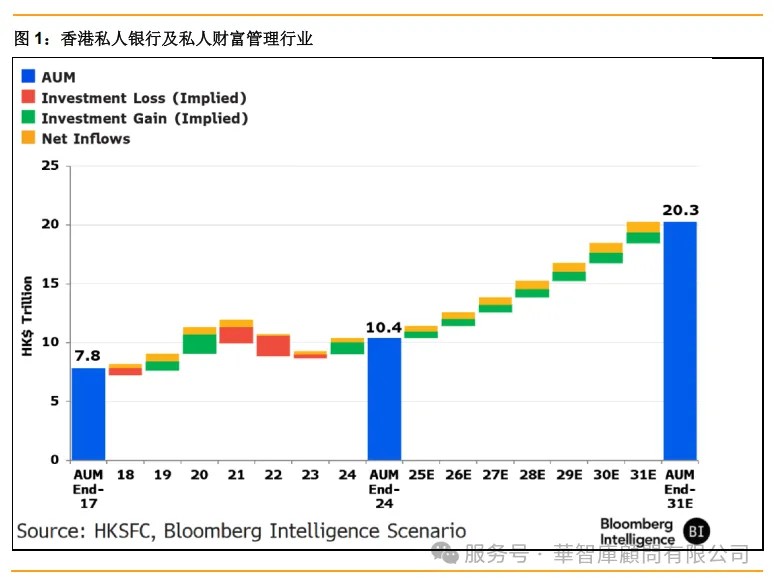
Bloomberg predicts that private banking and wealth management businesses in Hong Kong are expected to maintain an average annual compound growth rate of approximately 10% between 2025 and 2031; By 2031, the total assets under management are expected to exceed HKD 20 trillion. The stable net inflow of funds and the gradually increasing asset return rate constitute the key driving force for the sustained expansion of the industry.
Bloomberg predicts that private banking and wealth management businesses in Hong Kong are expected to maintain an average annual compound growth rate of approximately 10% between 2025 and 2031; By 2031, the total assets under management are expected to exceed HKD 20 trillion. The stable net inflow of funds and the gradually increasing asset return rate constitute the key driving force for the sustained expansion of the industry.
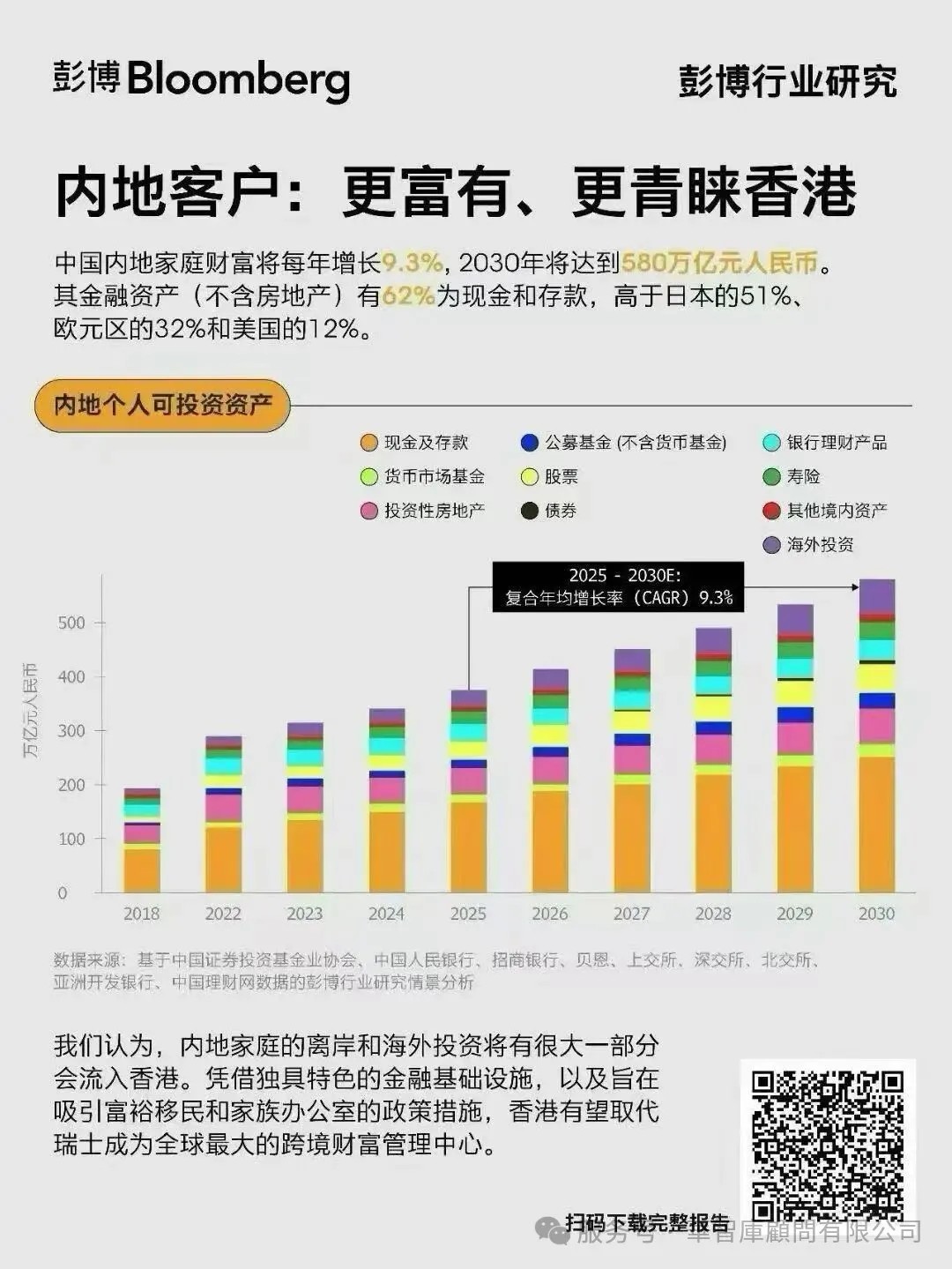
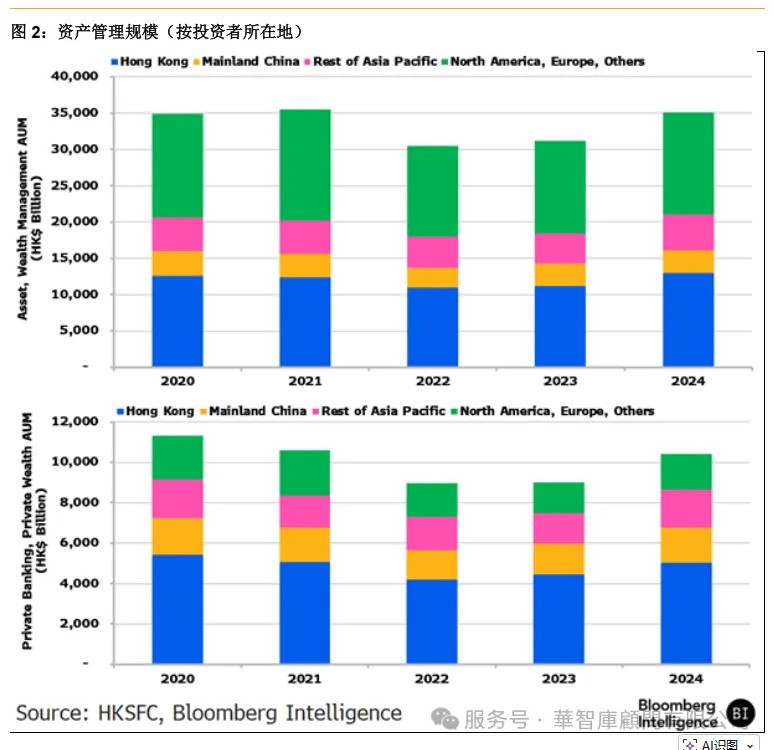
Data shows that it is expected that within the next three to five years, mainland clients will account for 30% of the new clients in the wealth management industry in Hong Kong (currently around 26%), and this proportion will continue to rise.
The Great Migration of Mainland Wealth
4、 Why is Hong Kong?
Bloomberg's research report points out that more and more mainland investors are choosing Hong Kong instead of Singapore or Switzerland for overseas asset allocation. The key is that Hong Kong provides unique advantages for mainland investors, which are unmatched by other markets.
At present, mainland investors usually face the following four main problems:
1. Low asset return rate: The returns on deposits and wealth management products are generally low, which affects wealth accumulation;
2. Currency fluctuation pressure: The fluctuation of the RMB exchange rate has increased, and holding RMB assets alone is facing risks;
3. Single investment target: The asset portfolio is concentrated in the domestic stock market and real estate, which is susceptible to market fluctuations;
4. Inheritance arrangements are not easy: the wealth inheritance process is cumbersome and uncertain.
In response to the above issues, Hong Kong has three key advantages:
1. International Renminbi Business Center: Nearly 80% of offshore Renminbi transactions worldwide are conducted through Hong Kong, facilitating the connection of domestic funds and global investment;
2. Convenient Cross border Investment Channels: Cross border Wealth Management provides dedicated quotas for residents in the Bay Area, and the Hong Kong Stock Rules allow mainland investors to invest in Hong Kong stocks conveniently, with a smooth process;
3. Sound laws and diverse products: The common law framework and independent judiciary ensure property security, and financial products cover from principal guaranteed products to family trusts, meeting diverse needs.
Compared to places like Singapore and Switzerland, Hong Kong is more adaptable to the needs of mainland investors in terms of geography, law, and market connections. Related surveys also indicate that Hong Kong has surpassed Singapore in terms of the growth rate of high net worth individuals and net inflow of funds, becoming a "place of preservation" and "place of appreciation" for global capital choices
5、 Continued positive news: The threshold for 2026 will be further relaxed
Bloomberg analysis shows that 2026 will continue to be an important stage for Hong Kong to increase policy openness and attract more mainland capital and professional talents. Individual investors can also seize opportunities and focus on the following three aspects:
The rapid growth of family offices: In 2024, the assets under management of family offices in Hong Kong amounted to approximately $198 billion, with an expected increase of over 80% by 2030. This is mainly due to tax exemptions, investment residency programs, and favorable regulatory conditions.
A new opportunity for RWA with a scale of 4.6 trillion US dollars: As the market focuses on digital currencies, Hong Kong has seized the opportunity for future finance. With the improvement of stablecoin regulations, it is expected to drive the development of the asset tokenization market to approximately $4.6 trillion.
Deepening of interconnection mechanism: "Cross border Wealth Management Connect" has entered the 3.0 stage. For ordinary investors, this is the most convenient cross-border investment route: the current 2.0 version has expanded its products to structured deposits and high-grade bonds, with the number of accounts significantly increasing from 25000 to 110000; Outlook for version 3.0 (Bloomberg forecast): By 2026, the personal investment limit is expected to increase from 3 million yuan to 5 million yuan and may be included in cross-border insurance, real estate investment trusts, and private equity funds, benefiting a wider range of investors.
This indicates that not only can stable wealth management be achieved in Hong Kong, but global assets can also be allocated.
The final words
Bloomberg's in-depth analysis report reveals a new trend in global asset flows: the regional focus of wealth management is rapidly shifting towards the East, and Hong Kong is at the center of this historic transformation.

From being expected to surpass Switzerland and become the world's largest offshore wealth management center, to taking on the growing demand for international asset allocation in mainland China, to the rapid expansion of cross-border insurance business - Hong Kong's role as an international financial center is constantly strengthening and its position is becoming increasingly stable.
Are you ready?
Disclaimers
The above content only represents the views of this website and is not intended as any form of investment advice. The product information and data mentioned in this article are sourced from official public information of insurance companies, banks, and other institutions in Hong Kong. The content is for academic exchange and market research reference only and does not constitute any professional insurance advice, sales invitation, or investment recommendation.