
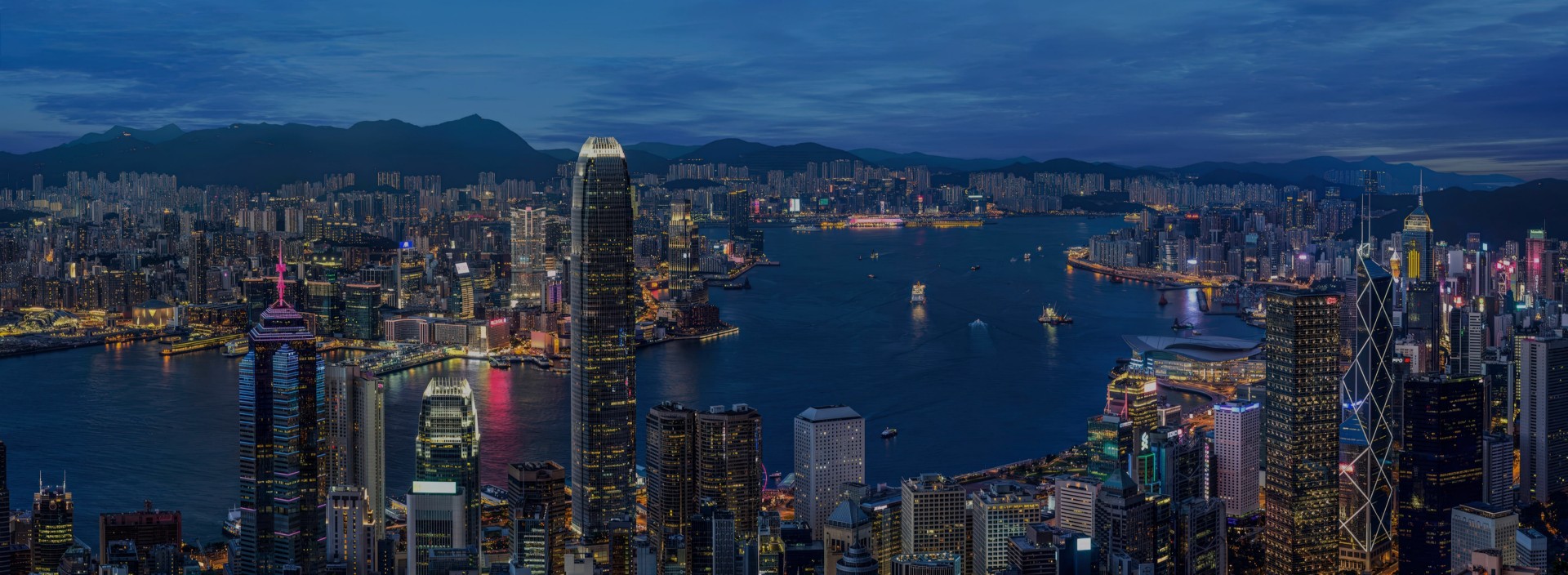
2.95 trillion US dollars, the coronation and closure of Hong Kong
On May 27th, I read two news articles about Hong Kong almost at the same time.
A report from Boston Consulting Group's "2026 Global Wealth Report". Hong Kong's cross-border wealth management scale has reached $2.95 trillion, surpassing Switzerland's $2.94 trillion for the first time, becoming the world's top center for offshore wealth - and according to Boston Consulting Group, this is an irreversible rebound.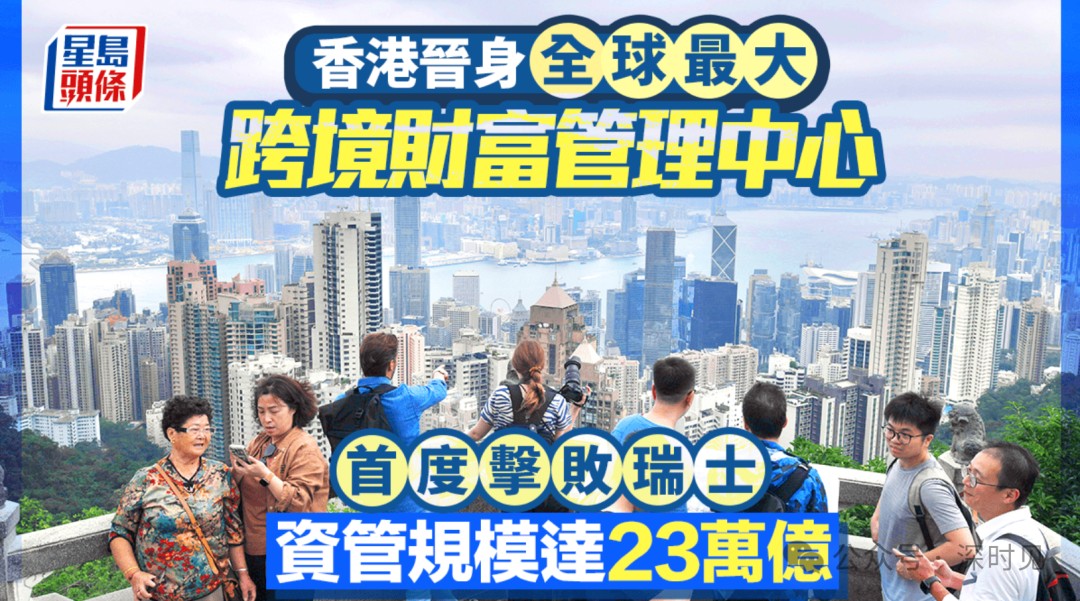
Another one comes from 'Caixin'. The Hong Kong Monetary Authority has issued a regulatory circular, requiring banks in Hong Kong to strengthen supervision of mainland customers. Some Chinese banks have suspended opening investment accounts for new users.
On one side is coronation, and on the other side is closure. This is not a coincidence, but the key to understanding Hong Kong today.
01 | That suffocating zero
Let's talk about the crown first. The difference between 2.95 trillion and 2.94 trillion is only 10 billion US dollars. It doesn't matter.
What really matters is that the most eye-catching number in the report is another one——
About 60% of Hong Kong's offshore assets come from mainland China.
BCG also predicts that by 2030, the gap between Hong Kong and Switzerland will widen to nearly $600 billion. In the next few years, Hong Kong, together with Singapore, which is also a gathering place for Chinese, will have an annual growth rate of around 9%, while Switzerland will only have around 6%.
This is not a fleeting lead, but a diverging track. Money is moving on a large scale worldwide. There are three remaining questions:
Why can't Switzerland hold on?
Why should money from mainland China go?
Why did they choose Hong Kong?
02 | How did Switzerland make it with its own hands
Hong Kong did not defeat Switzerland, it was Switzerland itself that loosened its grip first.
What makes the world's wealthy people put their money in Zurich, besides the scenery of the Alps, is only four words - bank secrecy. However, this business has been repeatedly delayed over the past decade. The FATCA (Foreign Account Tax Compliance Act) in the United States, the OECD, and our Automated Exchange of Information (CRS), as well as the ongoing pressure from the European Union, have almost eliminated the core selling point of "secrecy" that Swiss banks rely on for survival.
The straw that crushed faith fell in March 2023, when the century old Credit Suisse collapsed overnight and was urgently taken over by UBS. Before the giant's brand landed, there were already a series of leading data: between 2008 and 2017, more than 50 Swiss banking brands disappeared, and the proportion of the financial industry in GDP fell from 12% to 10%.
When the golden signboard of "confidentiality" is no longer present, Switzerland will only have one label left - expensive.
03 | Why do Chinese people have to leave with their money
The second key point is to return to the 60% of mainland funding sources.
The logic driving this money out has changed. In the past, wealthy individuals placed their assets offshore mainly for tax avoidance and corporate structure. However, after the pandemic, the motivation has increasingly shifted to "diversified bets" - spreading assets across multiple jurisdictions to hedge against geopolitical tensions, sanction risks, and certain uncertainties.
Smart money is voting with its feet. And the landing point it chooses is itself a judgment.
04 | Hong Kong's' three-stage rocket '

The third question: Why Hong Kong?
The resurgence of Hong Kong is the result of various needs and the cause and effect of its historical rise.
policy side
A combination of low tax rates, investment immigration programs, family office tax exemptions, and the Hong Kong Wealth Inheritance Institute pave the way for big money. The Chief Executive has set the goal of introducing no less than 200 households by the end of 2025, which has been achieved ahead of schedule, and has now shifted the focus to introducing another 220 households before 2028.
Capital market side
In 2025, Hong Kong IPO raised approximately $34.3 billion, a year-on-year increase of about 210%, regaining the world's top spot after a gap of 2019. In the first quarter of 2026, the growth will accelerate, with a total fundraising amount of HKD 151.4 billion, a year-on-year increase of 604%, firmly ranking first in the world. This money printing machine continuously displays the highest quality assets from mainland China in Hong Kong's showcase.
Inventory end
By the end of 2023, there will be over 2700 single offices in Hong Kong, of which 885 have a management scale exceeding 100 million US dollars; In the first half of 2025, the number of ultra-high net worth individuals with assets exceeding $30 million increased by 22.9% year-on-year, reaching approximately 17200 people.
The three ends ignite together, and Hong Kong's role is highlighted by a sentence from Boston Consulting Group: in the new era, China is the designated gateway to the global market.
05 | Coronation and closure are not contradictory
现在,回到香港金管局发出监管通函。一边突破、一边限制,似乎进入"香港精神分裂"状态。但真相并不矛盾,其背后是两扇门。
Passionate pursuit
Home offices, ultra-high net worth clients, IPOs, and institutional funds - every screw of policy is being tightened for them.
Tightened by the system
Retail retail investors' account opening, questionable funding sources, and demand under compliance pressure. The Hong Kong Monetary Authority requires customers to use their own licensed bank or compliant legal account as the only settlement channel, and some Chinese banks have simply suspended investment account opening for new users in mainland China.
Behind this is a bigger logic, under the global transparent network woven by CRS, the business of "confidentiality" has disappeared worldwide, and this is precisely the root cause of Switzerland's decline. Hong Kong provides something else, and has always provided something like this - the compliance channel closest to China in a completely transparent world.
Tightening individual account opening is part of this strategy. Hong Kong is using compliance costs to exchange for its long-term qualification as a 'gateway to China'. This is not closing the door, but making it narrow, high, and expensive - just to screen out clean money.
06 | The biggest advantage is the biggest risk
Boston Consulting Group wrote a restrained yet fatal sentence in its report:
“香港正在巩固中国通往全球市场的门户角色,但同样的高度集中,也把它的轨迹与内地经济和监管走向紧紧绑定。”
The more abstract this sentence is written, the more concrete reality responds.
In July 2025, the Hong Kong Monetary Authority fined three banks a total of HKD 16.2 million for "failure to continuously monitor customer business relationships"; In the same year, the Legislative Council passed the Banking Amendment Ordinance to strengthen the sharing of suspicious account information among banks. Combined with the fact that mainland individuals have an annual foreign exchange purchase limit of $50000 and overseas securities investment under capital has not yet been opened to individuals, the once almost "zero threshold" channel is narrowing at a visible speed.
60% from mainland China is the engine of Hong Kong and also a single hidden danger. It allowed Hong Kong to complete its anti takeover of Switzerland within three years, which also means that if there is a change in capital flows or regulatory standards in mainland China, this rocket may stall in the same amount of time.
07 | The world is splitting into two vaults
Pull the camera to the farthest point.
Boston Consulting Group has made a bigger judgment than Hong Kong surpassing Switzerland: global wealth management is forming two centers——
Hong Kong and Singapore serve Asia, while Switzerland, the United Kingdom, and the United States serve the West.
The future international financial center may no longer be a replacement of city rankings, but a global capital map that is dividing into two along geopolitical fault lines.
Zurich has been guarding not only money for a hundred years, but also a belief in neutrality, safety, and predictability.
When this faith began to waver, the world realized that no treasury was sacred, and no flag was a permanent safe haven. Disclaimers
Any articles, data, and information contained on this website are for reference purposes only. This information is only general information and does not constitute any sales recommendations or product recommendations or service offers. Before making any decisions regarding the information in this material, it is recommended to seek independent advice from appropriate professionals.
Any opinions or information presented in this material are based on general circumstances and should not be taken as advice by readers.
The data and explanations in this information can only be read as general reference data. We do not assume any responsibility or guarantee for the accuracy, completeness, and timeliness (if outdated) of the data source or any claims and/or losses arising therefrom. We reserve the right to change or delete any information on this account at any time without prior notice. For detailed data, please refer to the actual product terms or relevant product and service agreements in accordance with the laws of the place where the product is located within Hong Kong.
Any of the above information is only applicable to individuals residing within Hong Kong. All information and data on this website cannot be interpreted as providing, selling, or recommending the purchase of any insurance products to anyone outside of Hong Kong. Providing or selling any of the aforementioned insurance products under the laws of any jurisdiction outside of Hong Kong is illegal. The information contained on this website should not be distributed or copied to anyone residing outside of Hong Kong (including mainland China). In addition, we explicitly state that we do not assume any responsibility for the use or interpretation of the data contained in this article by others.