

RMB rises above 6.8+Trump visits China: Buying Hong Kong insurance now, is it picking up loopholes or stepping into pitfalls?
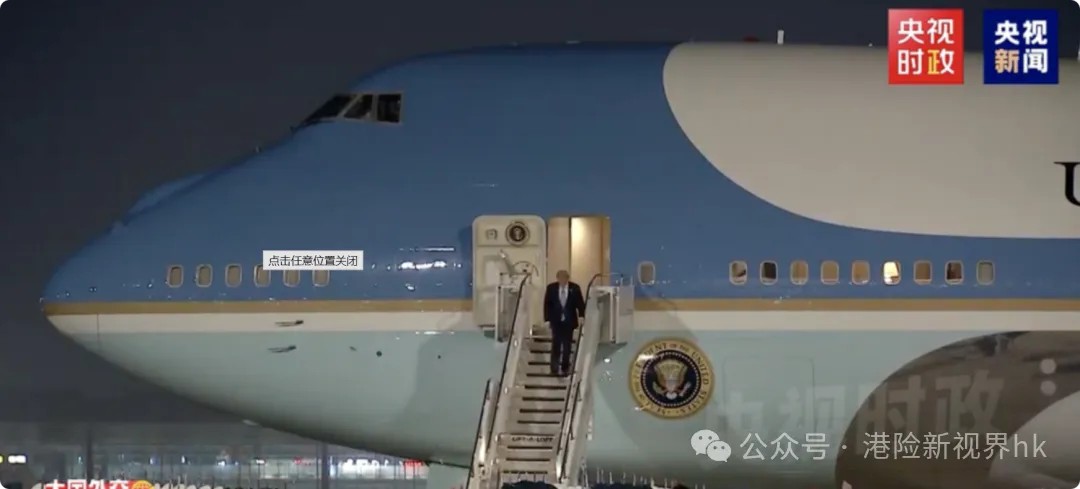
On the evening of May 13th Beijing time, Trump's special plane landed in Beijing. This globally influential visit has formed a wonderful resonance with the "highlight moment" of the Chinese yuan two days ago - this linkage is quietly changing our asset allocation window.
As early as May 11th, both onshore and offshore Chinese yuan strengthened simultaneously, breaking the 6.8 mark and returning to a nearly two-and-a-half-year high, officially opening an appreciation channel.
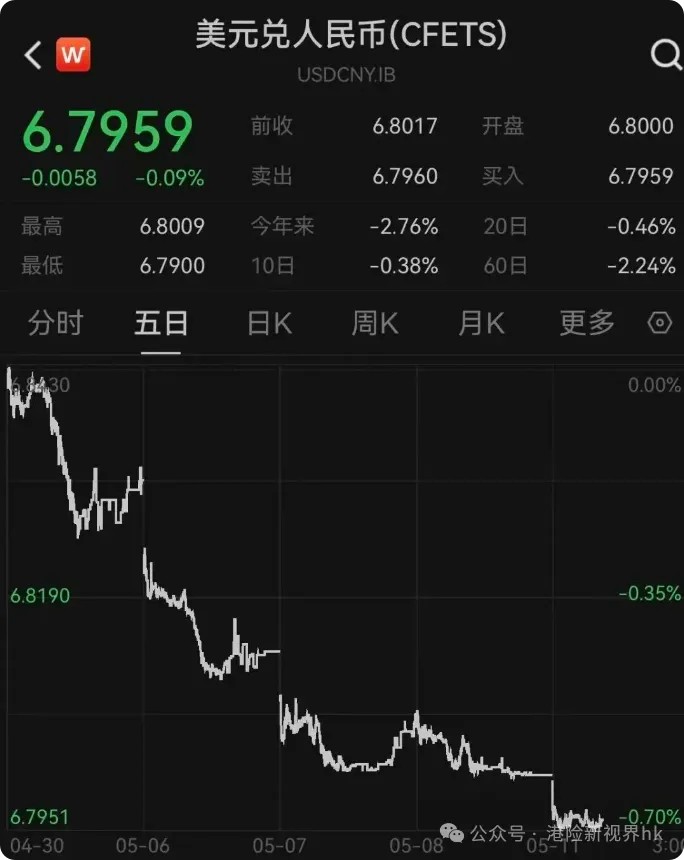
This is not accidental, but the result of global capital voting with real gold and silver, and the resonance of multiple forces has pushed the renminbi to a critical high.
The most concerning question for everyone is: Why is the Chinese yuan strong enough to break through 6.8? There are three core logics hidden behind it.
Firstly, the export resilience is fully enhanced
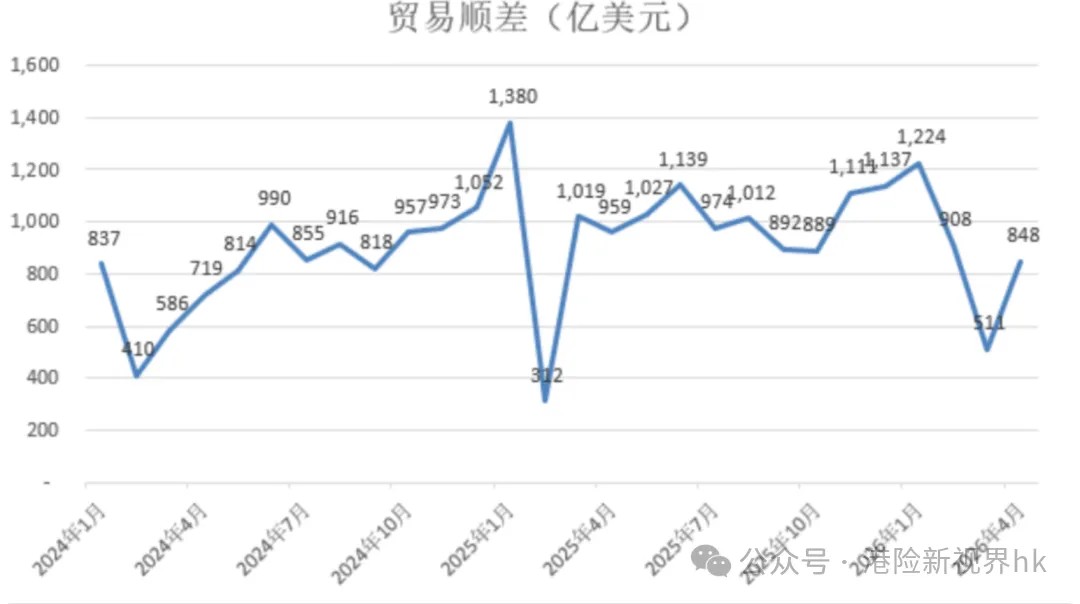
In April, China's exports surged 18.7% year-on-year, with a monthly trade surplus of up to 84.8 billion US dollars. Amidst the global investment boom in data centers and power equipment, China's high value-added products have exploded worldwide. Enterprises holding a large amount of US dollars need to exchange them for Chinese yuan to pay salaries and goods, and the strong demand for foreign exchange settlement has become the core booster for the appreciation of the Chinese yuan.
Secondly, Trump's visit to China releases positive emotions
As the first US president to visit China in 9 years, 'sitting down to talk' itself greatly eased market uncertainty. A-shares were the first to react, with the Shanghai Composite Index reaching an 11 year high of 4200 points. Foreign capital accelerated its inflow, and RMB assets became more popular, leading to an upward trend in the exchange rate.
Thirdly, the central bank provides precise guidance
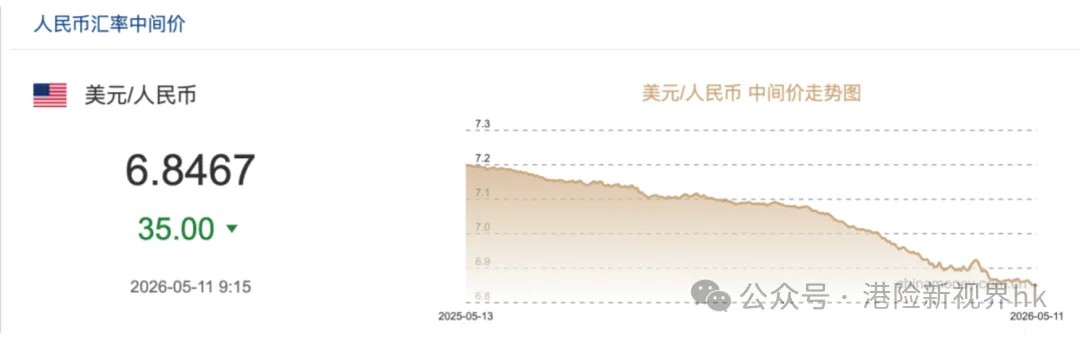
On May 11th, the central parity rate of the Chinese yuan rose by 35 basis points to 6.8467, reaching its highest level since March 2023; Since April, the cumulative increase has been 727 basis points. The policy signal is clear: a moderate appreciation of the renminbi is not only a necessity for internationalization, but also a reflection of market confidence.
Clarify the logic of appreciation, and more importantly, what will happen next after the RMB breaks through 6.8?
In the short term, market sentiment is still fermenting, and the positive signals during Trump's visit to China may further push up the Chinese yuan, with a technical target of 6.75. But don't expect to soar all the way, two major factors will form a suppression:
One is the seasonal pressure of foreign exchange purchases. June to August is the peak period for Chinese Hong Kong stocks to pay dividends and purchase foreign exchange, with an expected scale of about 59 billion US dollars. Enterprise foreign exchange purchases and dividends will hedge against the appreciation of the Chinese yuan;
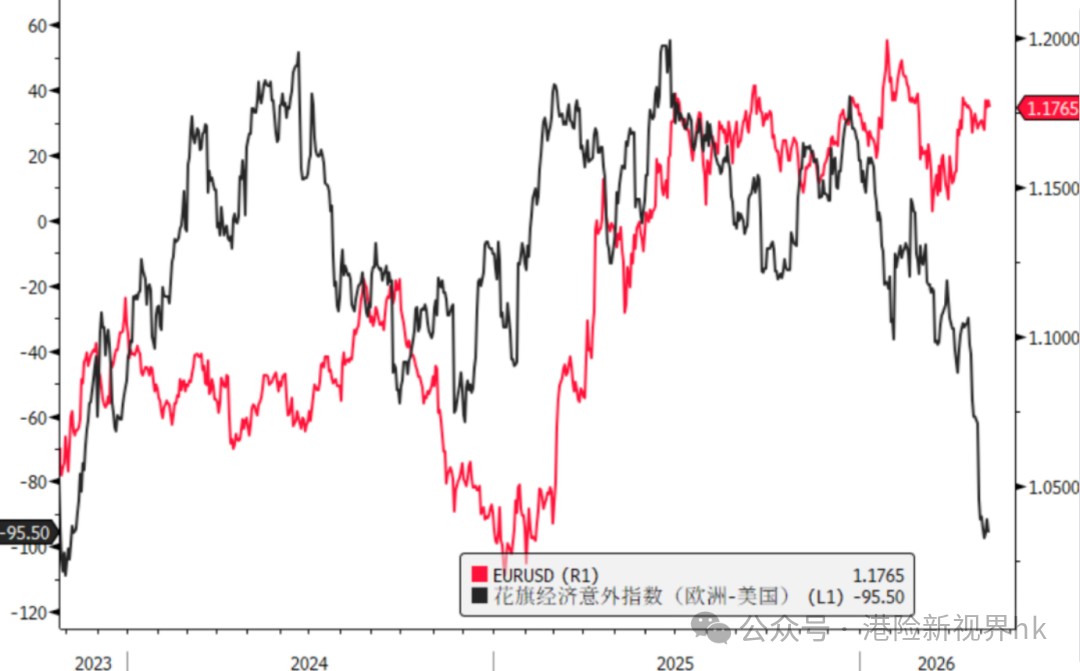
Secondly, the US dollar has not completely weakened, with the US economy and stock market performing steadily. Non farm employment data exceeded expectations, and the Federal Reserve is still expected to raise interest rates this year. However, the euro is struggling to break through key resistance due to energy costs, and the US dollar index has a clear bottom, limiting the appreciation space of the renminbi.
Exchange rate fluctuations touch people's hearts: Is buying Hong Kong insurance now a timing or a trap?
The clear conclusion is: simply gamble on exchange rate speculation, don't buy; If it is for long-term asset allocation and hedging currency risks, now is the cost window.
The core reason lies in the exchange rate difference. Hong Kong savings insurance is mostly priced in US dollars/Hong Kong dollars, with a premium of 100000 US dollars. Last year, the 7.3 exchange rate required 730000 RMB, but now the 6.8 exchange rate only costs 680000 RMB, saving 50000 directly, which is equivalent to a 93% discount on the exchange rate.
But before taking action, these three points must be carefully considered to avoid pitfalls:
Firstly, exchange rates are a double-edged sword. Buying now is cost-effective, but if the RMB continues to appreciate during future withdrawals, the amount exchanged for RMB will decrease. However, the core of Hong Kong insurance lies in long-term compound interest. Its flagship product has a long-term IRR of up to 6.5% and can be held for more than 20 years. Even if the RMB appreciates by 20%, its returns still outperform most fixed income products in mainland China, covering exchange rate fluctuations over time.
Secondly, the core is currency allocation rather than betting on exchange rates. The essence of configuring Hong Kong insurance is to have foreign currency assets to meet rigid demands such as studying abroad and overseas retirement, which is unrelated to short-term exchange rate fluctuations; When the Chinese yuan is strong, it is the most cost-effective time to allocate funds.
Thirdly, be alert to policy signals. The central bank does not allow the rapid unilateral appreciation of the renminbi. After the favorable news of Trump's visit to China is exhausted, the renminbi may experience a correction, and blindly following the trend to bet on the exchange rate may easily lead to a passive situation.
Finally clarify: who should take action and who should remain calm?
Suitable for people with current configurations:
If the child has a clear plan to study abroad and needs to exchange US dollars;
High net worth individuals who need to diversify their exposure to a single currency;
And investors who have idle funds and can hold them for 15-20 years or more without worrying about short-term fluctuations.
Advice for cautious individuals:
It takes 8-10 years for Hong Kong insurance to recoup the principal, and short-term withdrawal of loss funds is not possible for long-term holders who need to use money within three years;
Purely gambling on the depreciation of the Chinese yuan without foreign currency demand;
And those with weak risk tolerance and excessive sensitivity to exchange rate fluctuations.
For rational investors, this exchange rate window is a "discount coupon" to reduce the cost of Hong Kong insurance allocation, rather than an all in reason.
Disclaimers
Any articles, data, and information contained on this website are for reference purposes only. This information is only general information and does not constitute any sales recommendations or product recommendations or service offers. Before making any decisions regarding the information in this material, it is recommended to seek independent advice from appropriate professionals.
Any opinions or information presented in this material are based on general circumstances and should not be taken as advice by readers.
The data and explanations in this information can only be read as general reference data. We do not assume any responsibility or guarantee for the accuracy, completeness, and timeliness (if outdated) of the data source or any claims and/or losses arising therefrom. We reserve the right to change or delete any information on this account at any time without prior notice. For detailed data, please refer to the actual product terms or relevant product and service agreements in accordance with the laws of the place where the product is located within Hong Kong.
Any of the above information is only applicable to individuals residing within Hong Kong. All information and data on this website cannot be interpreted as providing, selling, or recommending the purchase of any insurance products to anyone outside of Hong Kong. Providing or selling any of the aforementioned insurance products under the laws of any jurisdiction outside of Hong Kong is illegal. The information contained on this website should not be distributed or copied to anyone residing outside of Hong Kong (including mainland China). In addition, we explicitly state that we do not assume any responsibility for the use or interpretation of the data contained in this article by others.